AI & Careers
How AI Is Changing the Skills Employers Expect From Freshers
Recruiters say the fresher brief has shifted from 'knows the tool' to 'can supervise the output'.
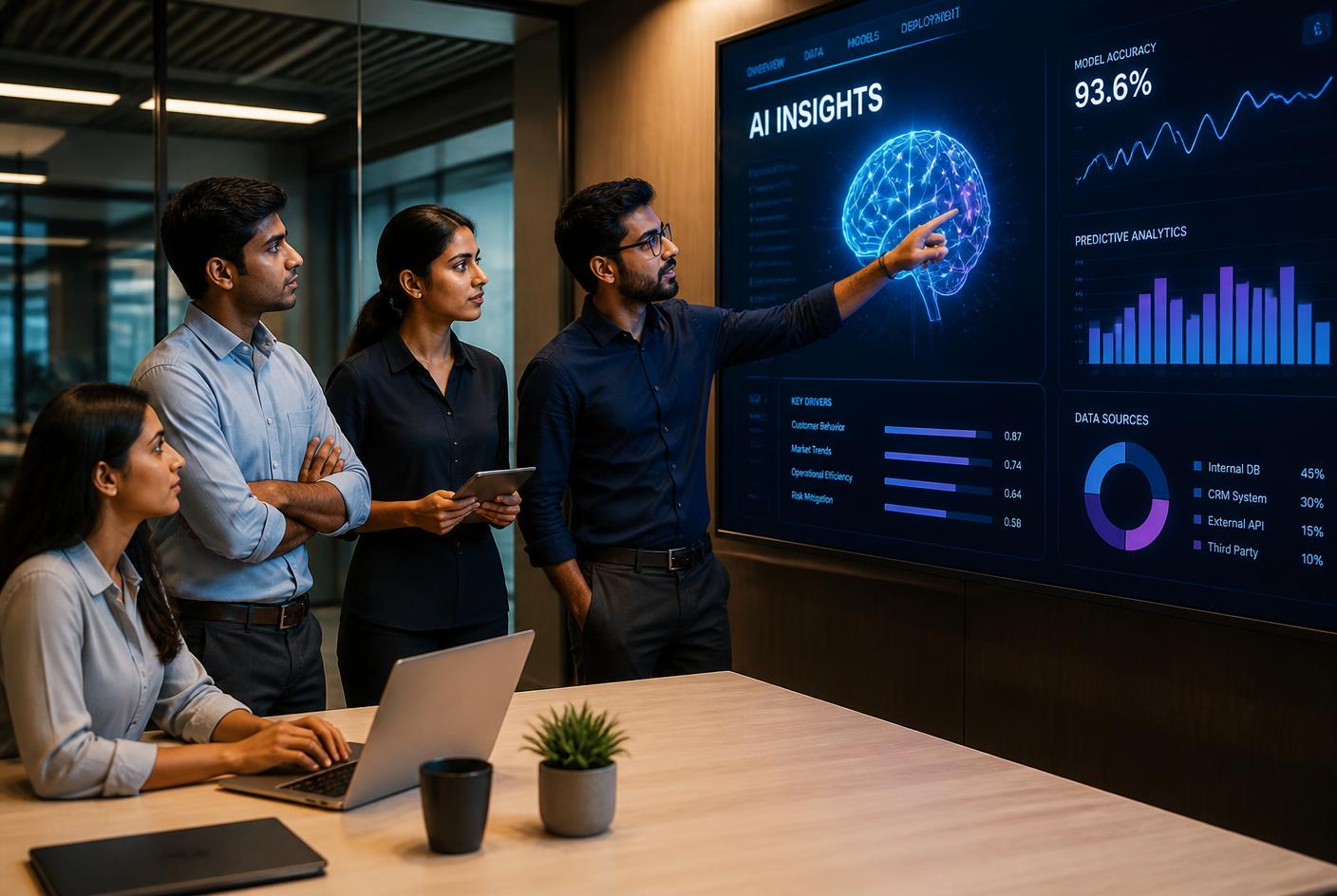
For most of the last decade, an entry-level brief in Indian services and product firms was built around tool familiarity: a language, a framework, a spreadsheet model, a CRM. Recruiters interviewed for that familiarity because it predicted how quickly a fresher could be billable.
Generative AI has compressed that first rung. Drafting, summarising, basic code scaffolding and first-pass analysis are increasingly produced by an assistant, which means the fresher's contribution is judged on what happens after the draft exists — the review, the correction, the judgement call and the client-ready framing.
Talent acquisition leaders interviewed on DCN's Recruitment Talks describe the change in similar language: they are hiring for verification skills. Can the candidate tell when an output is wrong? Can they explain the reasoning back to a reviewer? Can they document what they checked?
That has three practical consequences for students. First, portfolio evidence matters more than certificate counts, because a portfolio shows judgement. Second, domain literacy — finance, healthcare, manufacturing, law — becomes the differentiator, since the assistant supplies syntax but not context. Third, communication moves from a soft skill to an assessed skill, because reviewing and defending work is now the job.
None of this removes the need for fundamentals. Every leader DCN spoke to made the same caveat: candidates who skip the underlying concept cannot audit the machine's answer. AI raises the value of fundamentals rather than replacing them.
For institutions, the actionable step is assessment design. Take-home tasks that assume no AI use no longer test anything meaningful. Assessments that ask the student to critique, correct and cite an AI-generated draft map far more closely to the work employers are actually hiring for.
Key Takeaways
- • Entry-level briefs increasingly assume AI-assisted drafting
- • Verification, judgement and domain context are the differentiators
- • Portfolios and defensible reasoning outrank certificate counts
- • Assessment design on campus needs to assume AI availability
“We no longer ask a fresher to produce the first draft. We ask them to tell us why the draft is wrong.”
Frequently Asked
- Will AI reduce fresher hiring in India?
- Employers interviewed by DCN describe a change in the composition of entry-level work rather than a single directional cut. Verified hiring volumes should be read from published company disclosures and industry body reports rather than estimates.
- Which AI skills should a fresher learn first?
- Prompting is quick to learn and quick to commoditise. Recruiters place more weight on evaluating output quality, understanding data privacy limits, and applying AI inside a specific domain workflow.
Sources
- DCN Recruitment Talks interviews with talent acquisition leaders
- Employer briefings shared with the DCN editorial desk